

Salmonella Outbreak & Responsible BirdFeeding
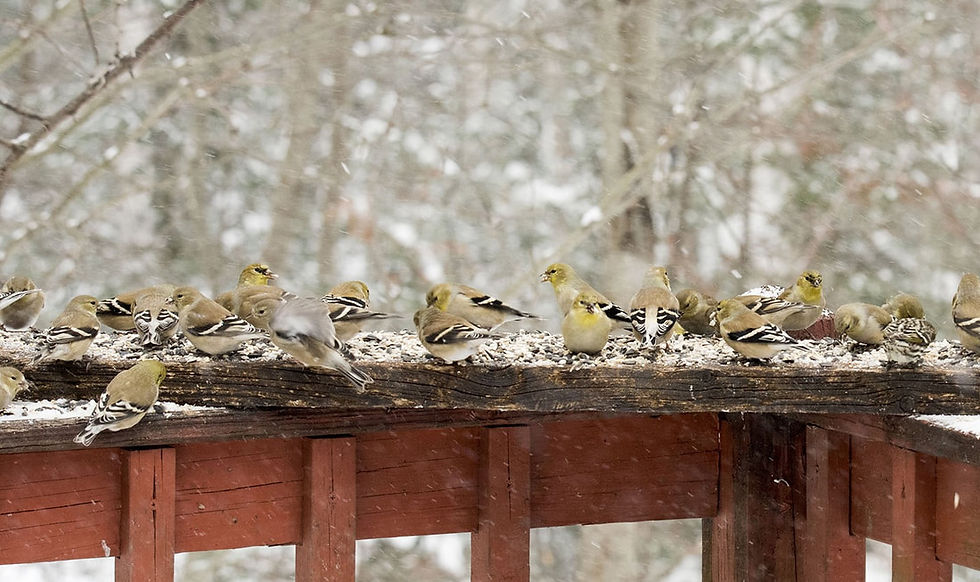
Each winter, an insidious foe infects our wild finch populations, and our backyard feeders may be contributing to the problem. Salmonella outbreaks are common among finch species, particularly during winter when the birds congregate at food sources. Pine siskins and goldfinches are especially susceptible to infection, and we have had recent reports of suspected salmonella fatalities of these species locally. Throughout much of the west, we are seeing an “irruption” of finches this year, which may contribute to the spread. This bacteria spreads primarily through fecal contamination of food and water, which is where our backyard feeders and bird baths come in.
What can you do to stop the spread of salmonella?
If you see signs of infection around your yard (ruffled feathers, lethargy, labored breathing, and diarrhea), remove feeders and baths for at least 14 days to help the birds “social distance” and disperse bird populations.
Clean feeders and water sources with a 10% bleach solution at least once a week (be sure to thoroughly rinse and dry the feeder before refilling)
Limit the amount of seed you place in your feeder to a one day supply
Avoid platform feeders (especially during the winter). These platforms collect food and feces and increase the likelihood of contaminated food.
Rake up any spilled birdseed below feeders. The ground is essentially one large platform feeder.
It is important to note that humans and our pets are susceptible to Salmonella infections as well, so wear gloves or wash your hands thoroughly after handling bird feeders and water sources and keep your pets away from any suspected infections.
We all love watching our feathered friends gather for a meal at our feeders, so let’s do our part to keep them healthy!


Comments